On 2 September BC Hydro said it had found the floating island of Williston Reservoir. The thing is about 140 metres long and 70 wide, carries standing trees, and had covered roughly thirty kilometres of open water in fifteen days. Nothing had happened to it. The search had been for an object that was never lost, only somewhere else than the last place anybody had written down.
The confusion was made by the order the pictures arrived in, not by the island. A satellite pass in July put it against one shore. A later pass showed open water where it had been, and that frame was read about three weeks after it was taken. So the disappearance was noticed after the departure had already finished, and the file went backwards: first an absence, then, eventually, a position.
What drifted is less exotic than the phrase suggests. Williston is a young reservoir, filled behind a dam in the 1960s over a forest that was never cleared, and its water has been giving up wood ever since. A mat of peat and matted roots holds enough air and fibre to float, and once trees take on it the whole raft carries a sail. After that the wind decides some of the days and the current decides the rest. None of it is steering.
That is the part worth keeping. A shoreline can stop being a place and become a thing in transit, and the only reason it counts as an event is that somebody had it written down as fixed. The island did not go missing from the reservoir. It went missing from the map, which is a different accident and a human one.
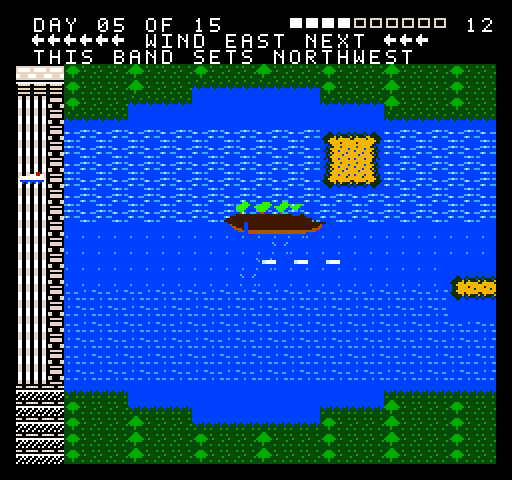
This issue puts you inside it. You are the island, you do not steer, and the whole of what you own is whether your trees are up to catch the wind and which band of water you are lying in. Fifteen days, thirty kilometres, and a dam behind you the current would be glad to give you back to.