On the evening of Sunday 6 September the president posted more than thirty-seven times from his golf club in Bedminster, New Jersey, a stretch of them inside ten minutes. Most carried pictures made by an image model. One was a lunar landscape captioned with the assertion that the Moon belongs to the United States, a flag set beside it. Others showed design boards for a Space Force uniform in shades its caption named as space grey and midnight black, a proposal to rename the state of New Mexico, and George Washington standing in the Oval Office.
Some of that is simply not in the gift of a president, and the limits are older than the posts. A treaty signed in 1967 by the United States and more than a hundred other countries closes off exactly the lunar claim: no nation may take a celestial body as its own, whether by declaring it, using it or occupying it. The state cannot be renamed from the White House either. Its governor answered that the name had been theirs since before the country existed, and a columnist at The Dispatch put the constitutional point more flatly: a president cannot rename a state.
What makes the evening worth a level rather than a shrug is that the same list contains things that did hold. Lake Ontario was renamed by an order signed on 27 August, during a trade quarrel with Canada; the Gulf of Mexico was renamed on the first day of the second term in 2025, and the new name has outlasted Mexico's refusal of it. Against those, the Strait of Hormuz was to be renamed after him one week and was disowned as a joke within hours.
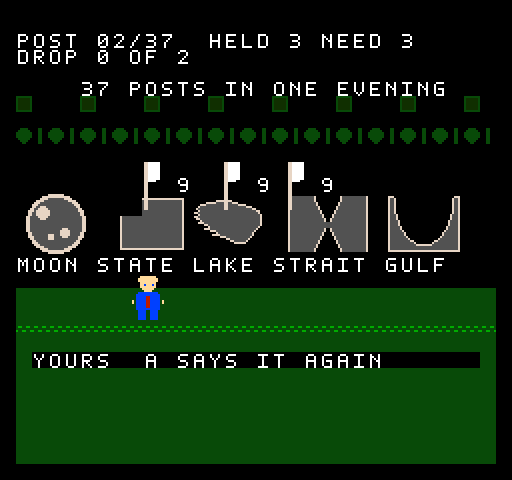
Nothing in the reporting says anyone has begun acting on any of it, and nothing on the Moon, in the state or in the strait has changed. The White House account rounded the night off with a clip of the president as a comic-book superhero, twenty-one million views by Monday morning. The gap the evening measures is the one between saying a thing is yours and it being so, and that gap is what this week's cartridge is built out of.