Windows XP reached its twenty-fifth anniversary on October 25, 2026. Tom's Hardware marked the occasion with a retrospective on the operating system's launch and long life. Microsoft's original announcement dates its worldwide availability to October 25, 2001, when it arrived in shops and on new computers. The anniversary returns attention to a desktop many people first encountered at school, at work or on a shared family machine. Its blue windows and grassy wallpaper have become a visual shorthand for that period of personal computing.
Behind the familiar appearance was a substantial change. As the retrospective explains, XP brought the Windows NT foundation to Microsoft's consumer operating system, replacing the DOS-based line that had continued through Windows Me. It offered features including built-in CD burning and ClearType text rendering, while its supported life extended into April 2014. Those details explain part of its historical importance. The anniversary also invites a different kind of recollection: the daily routines and recognizable places that grew around a computer's interface.
Microsoft itself has revisited that visual memory. Its 2021 collection of nostalgic Teams backgrounds featured Clippy, Solitaire, Paint and the Bliss landscape associated with XP. These references span different parts of Microsoft's history: Clippy belongs to Office, while Paint and Solitaire predate XP. Bringing them together is a portrait of a remembered computer, rather than a claim that every familiar application or character first appeared with this operating system. START AGAIN takes the same collection of associations as the setting for a fictional adventure.
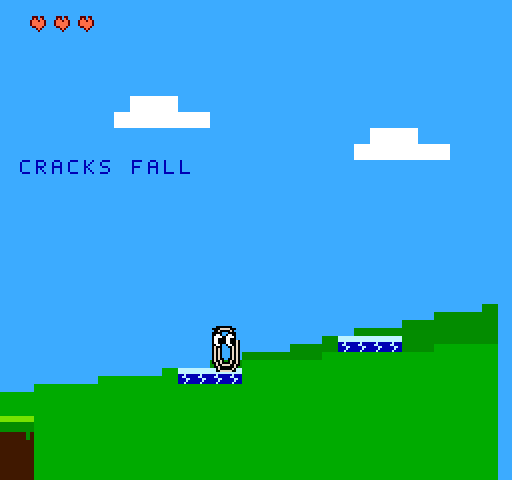
The game puts Clippy on foot beneath green hills, then sends the paperclip through a desktop pursued by popup windows. Paint becomes a flight on a brush, Word turns highlighted lines into timed platforms, and Solitaire provides springy stacks of cards before a cursor boss. Photos and hidden caches reward exploration; checkpoints let a failed jump become another attempt. Each completed location restores part of the desktop. The final shutdown preserves the journey as a memory. These hazards, abilities and encounters are inventions for the game, whose five locations run in sequence on the same NES cartridge played in the browser.