For as long as physicists have modelled flocks and swarms, the rule at the centre has been an average. Each animal is supposed to look at the neighbours around it, work out the direction they are collectively heading, and steer for that. It is a tidy assumption, it produces convincing schools on a screen, and nobody could watch a real school closely enough, turn by turn, to see whether any fish was actually doing it.
A group of physicists and neurobiologists at the University of California San Diego has now looked, and published what they saw in Physical Review Letters. Their animal is the micro glassfish Danionella cerebrum, which is tiny and transparent. Palka Puri, who led the work with Johnatan Aljadeff and Matthew Lovett-Barron, tracked schools across group sizes and stages of development, and the averaging was not there. A fish copies the heading of a single neighbour nearby, picked at random, and it copies nothing else.
The timing is the sharp part. Swimming is not continuous: it breaks into bursts, where a fish accelerates and turns, and glides, where it slows and runs straight. The end of one fish's burst opens what the authors call a window of opportunity, and a neighbour that takes it aligns within a fraction of a second. To check that the model described the fish rather than the other way round, the team put live fish in a virtual reality tank alongside virtual ones and made the virtual ones change direction. The real ones responded as predicted.
Copying one neighbour and averaging all of them are not two ways of saying the same thing. A group built out of one-to-one copying is far more volatile than the classical model predicts, and the same rule accounts for how schooling appears as the fish develop, and how schools gather and come apart. Because Danionella is transparent enough to image a whole brain, the finding points somewhere specific: “how the brains of these fish pay attention to each other and copy each other’s actions,” as Lovett-Barron put it.
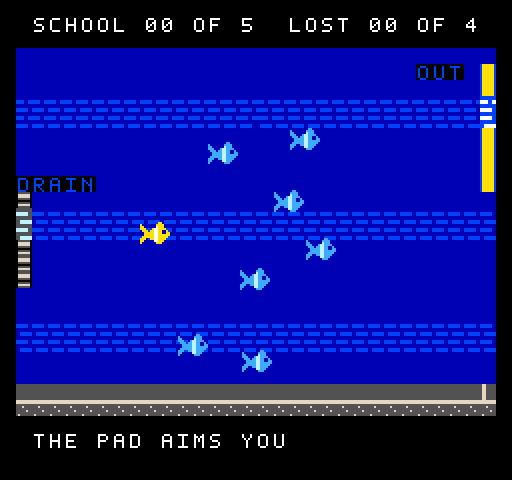
This issue takes the rule and hands the player the two moves it allows. You are one fish in a tank of eight. Turning yourself is the only way a new direction enters the school, and when your turn ends, one neighbour copies it — never all of them, and never the one you would have chosen.